






Achieving National Food Sovereignty
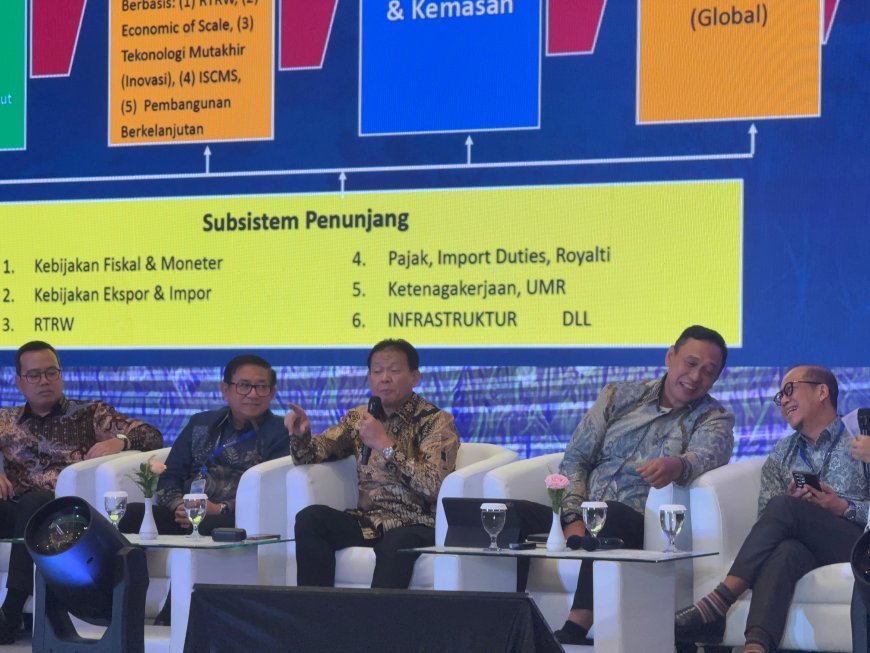
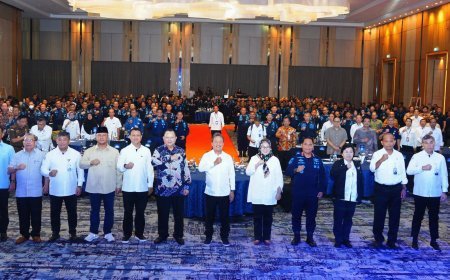
ORCANEWS.ID - Food sovereignty is the primary foundation for national progress, welfare, and economic stability. This was stated by Prof. Dr. Rokhmin Dahuri, MS, a member of the Indonesian House of Representatives (DPR RI) Commission IV from the PDIP Faction, during a Business Forum organized by the Central Board of the IPB Alumni Association at Hotel Borobudur, Jakarta, on Saturday (May 2, 2026).
The senator from Cirebon, who is known for being vocal in advocating for the rights of the common people, especially fishermen, presented a strategic study titled "Transformation of the National Food System Towards Prosperous and Sustainable Food Self-Sufficiency."
Prof. Rokhmin quoted President Soekarno's historic 1957 speech, which stated that food matters are a question of life and death for a nation. He warned that a country with a population of over 100 million would find it difficult to be sovereign if its food fulfillment still relies on imports.
"Food is the most vital basic human need because it determines health, intelligence, and survival," said the IPB University Professor. He added that the quality of human resources (HR) is heavily influenced by what is consumed, in line with the principle "you are what you eat."
However, the IPB University Professor also highlighted the irony of Indonesia being the world's largest archipelagic and tropical agricultural nation that has yet to achieve sustainable food self-sufficiency that prospers its producers. He noted that import dependency on strategic commodities remains very high. In 2025, the import volume of eight major food commodities, including rice, corn, and sugar, reached 29.15 million tons.
Furthermore, he pointed out several structural challenges, including low productivity in the agricultural sector. In 2025, agricultural labor productivity was recorded at only IDR 24.8 million per worker per year, far below the industrial sector, which reached IDR 161 million. This condition is exacerbated by poverty among farmers and fishermen, where the average income of rice farmers in Java is only about IDR 2.25 million per month.
In addition to productivity issues, Indonesia's food sector faces serious threats from climate change, such as the El-Nino and La-Nina phenomena, as well as the impact of global geopolitical conflicts that disrupt the world's food supply chain. The conversion of agricultural land, which averages 60,000 hectares per year, also poses a threat to the sustainability of domestic production.
So, what is the solution?
The Minister of Marine Affairs and Fisheries during the eras of President Megawati and Gus Dur offered concrete solutions to overcome these problems. Prof. Rokhmin encouraged the transformation of the food system through increasing the economy of scale, applying cutting-edge technology, and strengthening integrated supply chain management. He also emphasized the importance of alumni synergy and more conducive political-economic policies to attract investment in the food sector.
This business forum served as a consolidation event for IPB alumni to formulate strategic steps in supporting the government's food self-sufficiency targets while ensuring equitable national economic growth for all people.
What's Your Reaction?